From the Stone to the Drone
Written by: Liliana Romero, PhD.
Man Has Not Changed His Impulse for War; He Has Only Perfected His Instruments: From Stone to Drone
Throughout history, humanity has radically transformed the tools with which it wages its conflicts, but not necessarily the reasons that give rise to them. From the earliest sharpened stones to drones controlled from thousands of kilometers away, the evolution of weaponry reflects human technological development, yet it also reveals a disquieting constant: war, in essence, remains. The "how" changes, but not the "why."
In the so-called Stone Age (approximately between 2.5 million B.C. and 3000 B.C.), early humans began using rudimentary objects as weapons. Sharpened stones, primitive spears, and clubs served purposes ranging from hunting to defense. During this period, violence was inextricably linked to immediate survival. Organized armies did not exist, yet clashes between groups over resources, territory, or security were common.
With the advent of the Metal Ages (roughly 3000 B.C. to 600 B.C.), beginning with copper, followed by bronze, and finally iron, a revolution in weapon manufacturing took place. Swords, shields, spears, and armor enabled the formation of more structured armies. Civilizations such as those of Mesopotamia, Egypt, and later Greece and Rome perfected military tactics. War ceased to be merely a defensive necessity and evolved into a tool for expansion and political power.
During Late Antiquity and the Middle Ages (approximately 500 A.D. to 1500 A.D.), weapons grew in sophistication, yet they still relied on physical strength and proximity. Bows, crossbows, catapults, and swords dominated the battlefields. However, toward the end of this period, a discovery emerged that would forever change the way war was waged: gunpowder. Originating in China around the 9th century, gunpowder began to be used in military conflicts toward the 13th century. By the Early Modern period (approximately 1500–1800), its use had spread throughout Europe and other regions, giving rise to firearms such as muskets, cannons, and pistols. This advancement enabled attacks from a distance with greater lethality, reducing the importance of close-quarters combat. Warfare became more destructive and less personal.
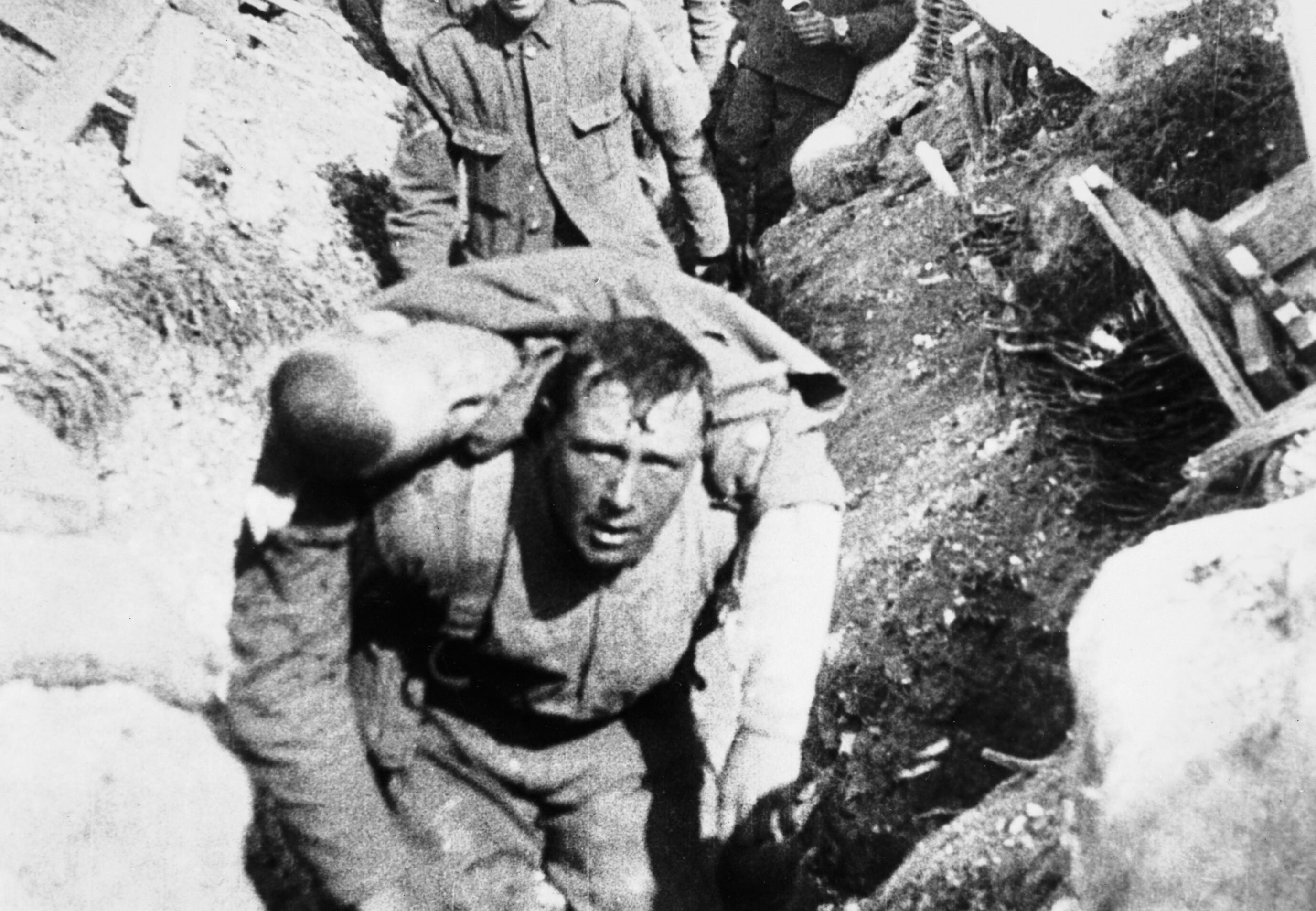
The 19th century and the early 20th century marked the industrialization of warfare. During conflicts such as World War I (1914–1918), weapons of mass destruction, such as machine guns, tanks, and chemical weapons emerged. The lattert, he use of which sparked immediate international outrage, gave rise to the first treaties seeking to limit methods of warfare, thereby introducing an ethical and legal dimension to armed conflict.
During this same period, a new dimension of combat emerged: the air. Aircraft, initially used for reconnaissance, began to be employed as attack platforms during World War I. By World War II (1939–1945), aviation played a central role, with bombers capable of destroying entire cities. Warfare was no longer confined to the battlefield; it now reached directly into the civilian population.
During the second half of the 20th century, the Cold War (approximately 1947–1991) spurred the development of increasingly sophisticated weaponry, including ballistic missiles and precision systems. Although direct confrontation between major powers was averted, the constant threat of global destruction marked a new era in military history.
In the 21st century, technology has elevated warfare to an unprecedented level. Drones, or unmanned aerial vehicles, enable military operations to be conducted without placing the soldiers operating them at direct risk. Since the early 2000s, their use has expanded in contemporary conflicts, offering capabilities for surveillance, reconnaissance, and high-precision strikes. This advancement poses a profound ethical dilemma: the possibility of minimizing one's own casualties may facilitate the decision to resort to force, further distancing human beings from the immediate consequences of war.
Thus, in observing this long evolution, from the stone to the drone, it becomes evident that humanity has radically transformed its tools of combat. Yet, the fundamental motivations; power, territory, resources, ideology, persist. War has not disappeared; it has merely adapted to each era.
Ultimately, the history of weaponry is not solely a history of technological innovation, but a reflection of human nature. As long as the root causes of conflict remain unchanged, it is likely that war will continue to evolve in its forms, but not in its essence.